
Celebrating St Clement’s Day and the timeless craft of British blacksmithing
23 November – St Clement’s Day
There’s no better excuse for making a little noise in the forge than St Clement’s Day!
Celebrated on 23 November, St Clement’s Day is traditionally associated with blacksmiths, who have long regarded St Clement, affectionately known as ‘Old Clem’, as their patron saint.
For generations, the day was marked with feasting, folklore, songs and some rather spectacular celebrations involving the blacksmith’s anvil. It was a chance for smiths to put down their hammers for a moment, celebrate their ancient craft and enjoy a little well-earned merriment.
Here at Made by the Forge, we think that’s a tradition well worth remembering. And with Nigel Tyas’s wonderful archive footage from 2017, we have a rather special way of celebrating this year!
A tradition with a bang!
One of the best-known St Clement’s Day customs was ‘firing the anvil’.
The tradition of ‘firing the anvil’ dates back to medieval times when village blacksmiths used to pour a little gunpowder into the small ‘hardy hole’ on their anvils and ignite it. This created a bang for dramatic effect, and also to serve the useful purpose of annually testing the integrity of the anvil – if it survived the explosion, it proved it was still sound with no hidden cracks. The firing of the anvil was, naturally, followed by a tour of the local pubs for apples and ale.
It was certainly not a quiet day!
The festivities could include processions, traditional songs, stories and visits to the local inns, where apples and ale helped the celebrations along.
Back in 2017, Nigel celebrated St Clement’s Day at his original forge in Millhouse Green, Yorkshire.
In this very short clip, Nigel demonstrates that working with metal can certainly make some noise!
WATCH THE VIDEO – NIGEL TYAS IN ACTION (2017)
A song for Old Clem!
St Clement’s Day celebration would not be complete without a song.
The traditional blacksmith’s songs and chants have been part of the folklore of the trade for generations. They celebrate the blacksmith’s place in village life, the importance of the forge and the camaraderie shared by those who worked there.
On the day in 2017, Nigel also welcomed the Mayor of Barnsley and a group of children from nearby Millhouse Primary School to his forge.
As well as introducing them to the sights and sounds of traditional blacksmithing, Nigel shared a little of the trade’s history and folklore, including a performance of the traditional Jolly Blacksmith song.
We think this is a lovely reminder that blacksmithing is about more than making beautiful things from iron. It is also about sharing knowledge, passing on skills and keeping traditions alive for the next generation.
WATCH THE VIDEO – NIGEL SINGS THE JOLLY BLACKSMITH (2017)
Why the blacksmith is the King of Trades
One of the most entertaining pieces of blacksmithing folklore tells the story of how the blacksmith became known as the ‘King of Trades’.
Legend has it that King Arthur once gathered together representatives of the various trades to decide which was the most important.
The tailor, baker, shoemaker, carpenter, butcher and mason all had their claims to make. But the blacksmith had a rather compelling argument.
Without the blacksmith, none of the others could properly pursue their trades!
The tailor needed shears, the carpenter needed chisels, the butcher needed knives and the farmer needed tools. All depended on the skills of the person working at the forge.
And so, according to the tale, the blacksmith secured the title of ‘King of Trades’.
“We like and respect all those other trades but can’t deny we are very proud to hold the title ‘King of Trades’ to this day!” Nigel Tyas.
From Yorkshire to Suffolk – keeping the craft alive
For Nigel Tyas, blacksmithing has been much more than a profession. It has been a lifelong passion.
Nigel began his career as a blacksmithing apprentice with the National Coal Board at Elsecar workshops in the 1970s. He went on to work for several industrial engineering companies in South Yorkshire before establishing Nigel Tyas Ironwork with his wife Elizabeth Stocker in 2000.
Together, Nigel and Elizabeth created a distinctive British ironwork brand, renowned for its beautifully designed, hand-forged lighting, chandeliers, wall lights, curtain poles and decorative ironwork.
Their commitment to traditional craftsmanship and quality helped establish Nigel Tyas as a respected name in British handmade ironwork, with customers both in the UK and overseas.
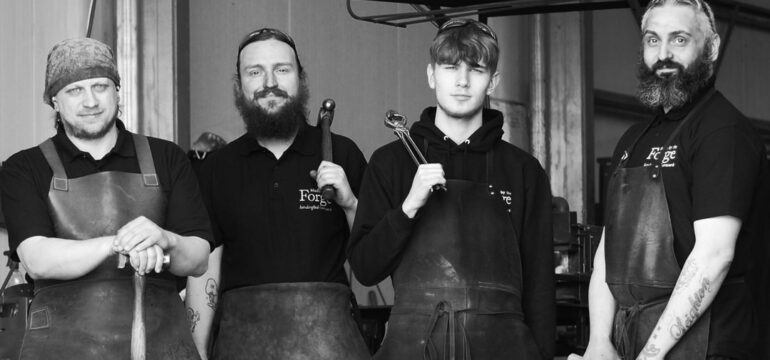
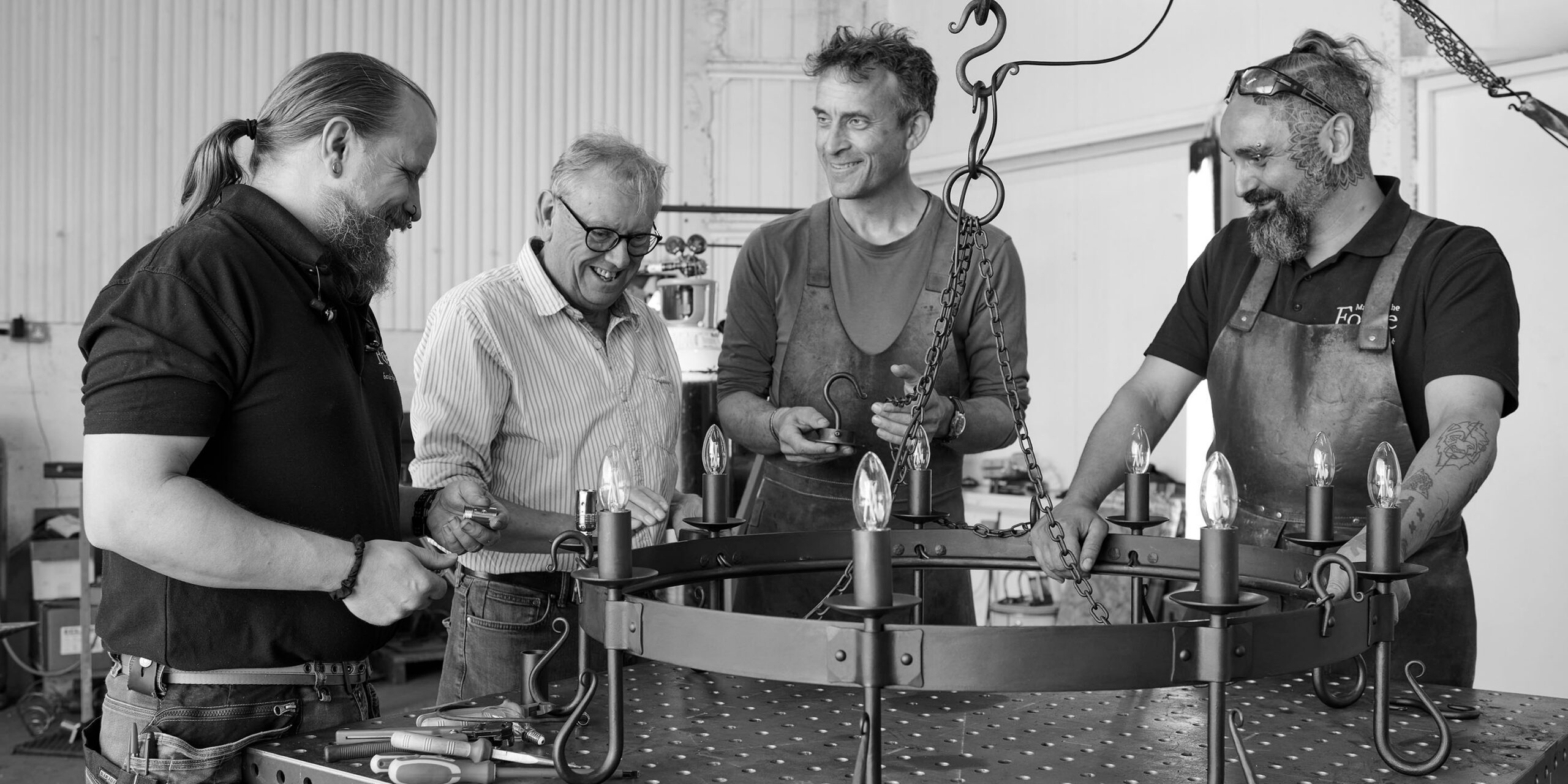
To keep this heritage alive Nigel’s much-loved designs are being hand-forged in Suffolk by our highly skilled team of blacksmiths, working closely with Nigel to retain the character, quality and attention to detail that made the collection so special.
It is a wonderful meeting of British craft and design, united by a shared respect for traditional skills, the expertise of our blacksmiths and the enduring beauty of handmade ironwork.
The craft continues
At the heart of blacksmithing is the timeless skill of shaping iron by hand, with patience, precision and experience.
At Made by the Forge, we’re proud to continue this tradition in Suffolk, keeping the Nigel Tyas designs and the craftsmanship behind them alive.
So today, we raise a toast to Old Clem, Nigel and the generations of blacksmiths who keep the fire burning.
Long live the King of Trades!
Happy St Clement’s Day from everyone at Made by the Forge.



Leave a Reply
You must be logged in to post a comment.